
Straight Antennae
Termites have straight, beaded antennae, ants have bent ones.
Pest ID Guide
Termites work silently and can cause serious damage before you notice. This guide helps Oklahoma City homeowners spot the signs, tell termites from flying ants, and act before the damage spreads through the home.
If you found mud tubes on a wall or a pile of shed wings by a window, termites may be at work. This guide is for Oklahoma City homeowners who want to catch termites early, since they cause costly damage while staying out of sight.
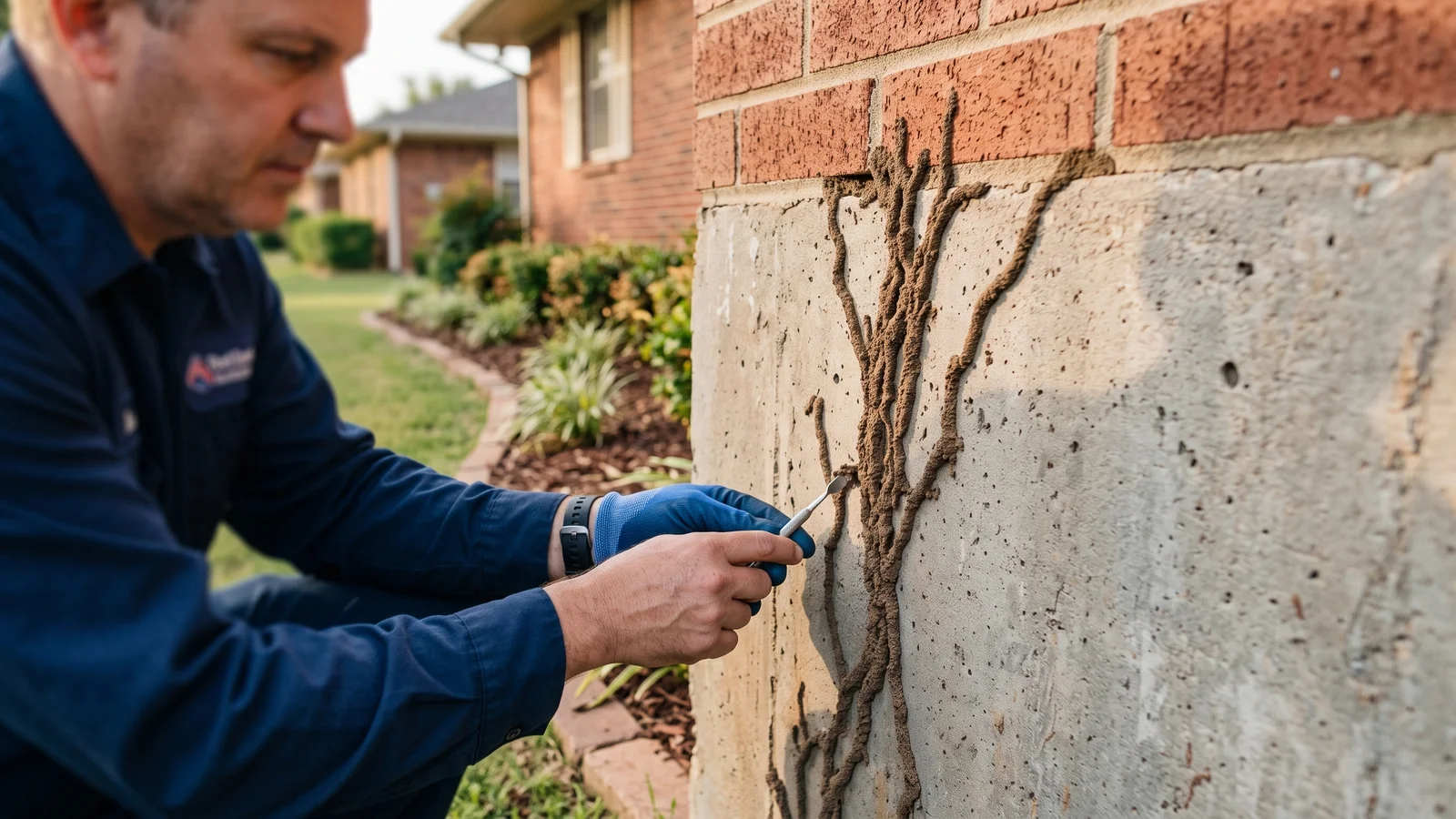
The most common termite in Oklahoma is the eastern subterranean termite. Workers stay hidden in wood and soil, so you rarely see them. Instead you see their signs, the clearest being pencil-thin mud tubes running up foundations.
During swarm season you may see winged termites, which are easy to confuse with flying ants. The difference matters, because termites damage the structure of your home while flying ants do not. Reading the signs correctly is the first step.
Three quick checks separate a termite swarmer from a flying ant.
Termites have straight, beaded antennae, ants have bent ones.
Termites have a thick waist, ants have a pinched one.
Termite wings are all one length, ant wings differ.
Piles of equal-size wings by windows point to termites.
Pencil-thin soil tubes are a termite sign, never an ant one.
Subterranean termites swarm in spring, often after rain.
Termites hide, so learn the evidence they leave.
Pencil-width soil tubes climbing foundations and walls.
Wood that sounds hollow or papery when tapped.
Small piles of equal-size wings near windows and doors.
Bubbling or uneven paint over damaged wood surfaces.
Tiny wood-colored droppings from drywood termites.
Warped frames and stuck doors from moisture damage.
Look for mud tubes on walls, piers, and slab edges.
Listen for a hollow sound in trim and framing.
Confirm straight antennae and equal wings.
Book an inspection fast to stop ongoing damage.
Termites eat wood from the inside out, so a beam can look fine on the surface while it is nearly hollow within. Because the damage is hidden, many homeowners do not find termites until floors sag or trim crumbles, long after work began.
Subterranean termites in Oklahoma nest in soil and build mud tubes to reach wood while staying moist and protected. Those tubes are your best early warning. A spring swarm of winged termites near your home is another clear call to act.
The cost of waiting is steep, since termite repairs are rarely covered by homeowners insurance. Catching the signs early and getting a professional inspection keeps a small colony from turning into major structural repairs down the road.
Very knowledgeable. I have him handle pest issues at all of my houses. Quick to respond and gets it done right. Highly recommend.
They caught termite tubes on our foundation before it turned into a nightmare. Clear explanation and a solid plan. Very thankful.
He did an extra treatment on the first visit and came back after two weeks. The problem was gone in both houses. Very trustworthy.
Get a free inspection from a veteran-owned team. We confirm the signs, gauge the damage, and protect your home across the Oklahoma City metro.