

North Canadian Corridor
Wooded river edges where wildlife drops ticks into nearby yards.
Veteran-Owned · Serving All of Oklahoma County
Ticks ride wildlife along the North Canadian River corridor and out of Choctaw acreage, while fleas fill shaded city yards. Armory treats the yard where the life cycle lives, across the whole county.
Fleas and ticks live in the yard, not the pet, so the county's landscape decides the pressure. Oklahoma County sits in a humid grassland plain with tree cover along its river corridors. The North Canadian River runs right through the county and Oklahoma City, and Lake Overholser and Lake Stanley Draper anchor wooded, grassy edges. Wildlife moving along those corridors, deer, raccoons, opossums, and stray cats, drops ticks and fleas into the yards nearby.
The pressure shifts by setting. Choctaw and Harrah acreage with tall grass, brush, and adjacent fields carries the heaviest tick load, and creek-backed lots hold ticks even in the growing suburbs. In central Oklahoma City and inner suburbs, shaded, mature yards trap the moisture fleas need to complete their life cycle. Armory treats the yard zones where eggs, larvae, and adults hide, so pets and family stop bringing them inside.
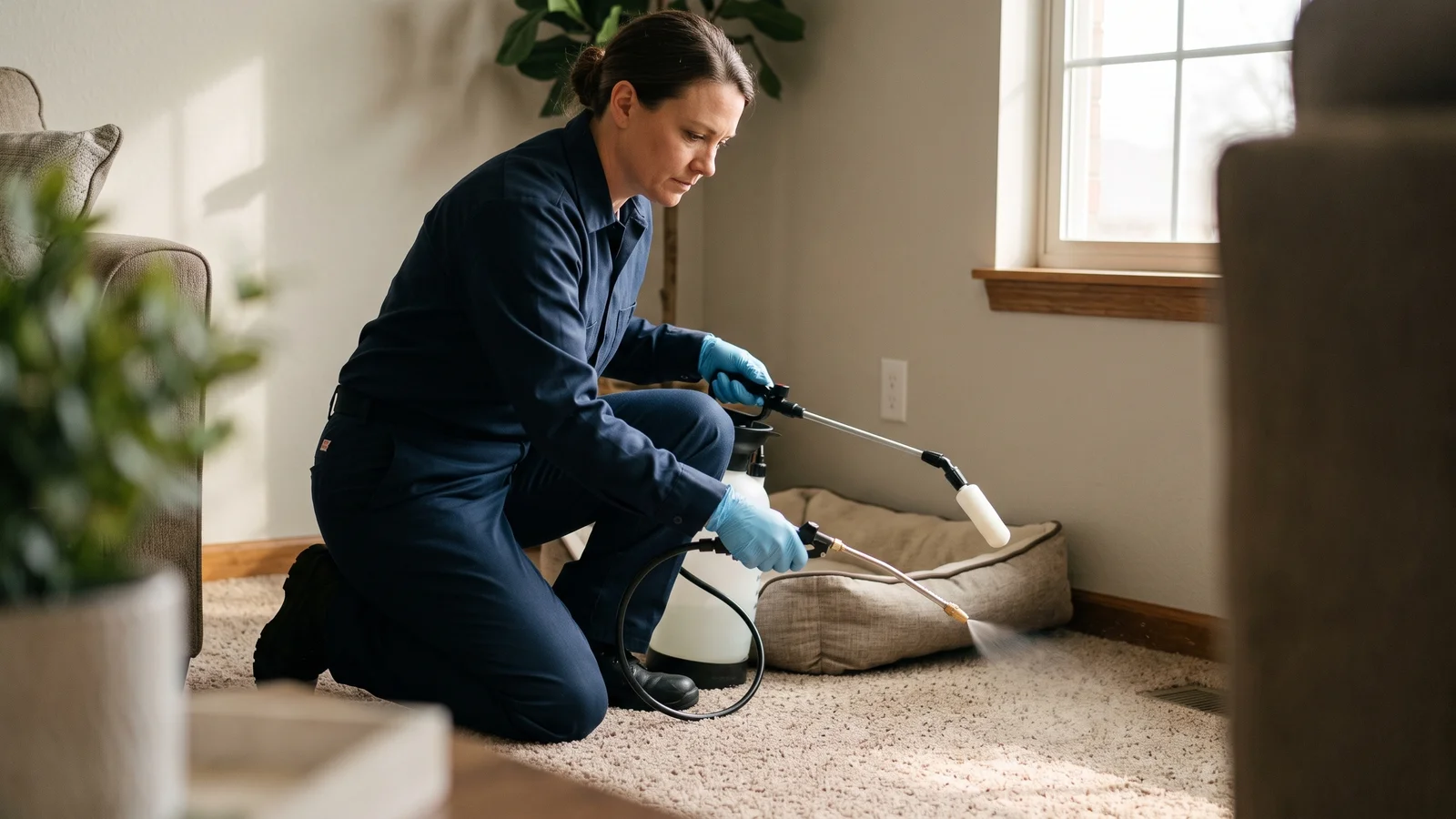
Yard-focused control for city shade and country acreage.
We target eggs, larvae, and adults so the cycle actually breaks.
We treat the shaded, grassy edges where ticks wait to latch on.
We handle tall grass, brush, and field edges in Choctaw and Harrah.
Safe yard protection for homes with dogs and cats.
The same team runs from Bethany to Choctaw with fast scheduling.
Month-to-month protection with free re-treatments between visits.
Wildlife corridors and shaded yards drive the pressure. We treat both.
Wooded river edges where wildlife drops ticks into nearby yards.
Acreage with tall grass, brush, and fields that carry heavy tick loads.
Grassy, wooded reservoir edges that hold ticks and wildlife.
Shaded, mature yards that trap the moisture fleas need.
Creek-backed lots in newer areas where ticks still wait in the brush.
Older inner-ring yards with dense plantings and flea harborage.
We check the yard for shaded harborage, grass edges, and brush lines.
We map the zones where fleas breed and ticks wait to latch on.
We treat those zones to hit eggs, larvae, and adults at once.
We return on schedule through the warm season to hold the yard clear.
Could not have had a better experience. They explained the plan, came out fast, and I saw results the first week. Highly recommend Armory.
He did an extra treatment on the first visit and came back after two weeks. The problem was gone in both houses. Very trustworthy.
Very knowledgeable. I have him handle pest issues at all of my houses. Quick to respond and gets it done right. Highly recommend.
Treating the pet without treating the yard is a losing game. Most of a flea population lives outside as eggs and larvae in shaded, humid ground. In central Oklahoma County's mature yards, that moist harborage lets fleas keep hatching long after a pet is treated. Hitting the yard zones is what actually stops the reinfestation.
Ticks are about the edges. They do not fly or jump. They wait on tall grass and brush for a host to brush past. Along the North Canadian River corridor and out on Choctaw and Harrah acreage, wildlife keeps restocking those edges with ticks. Treating the grass lines, brush, and shaded borders is where tick control happens.
Timing carries the season. Flea and tick pressure builds through the warm months in the county's humid climate, so a treatment plan through spring, summer, and early fall keeps the yard from rebounding. For creek-backed and acreage lots, that steady schedule is the difference between a usable yard and a constant fight.
Get a free inspection from a licensed, veteran-owned team that treats the yard zones where fleas breed and ticks wait. We cover shaded city lots, creek edges, and rural acreage, with free re-treatments and no contracts.